A wound usually won't heal because something is actively working against it: poor blood flow, infection or biofilm, uncontrolled diabetes, constant pressure, smoking, low protein, or a dressing routine that doesn't fit the wound. If your wound hasn't clearly improved in two weeks, that's the signal to stop waiting and start looking for the cause.
You're not alone in this. About 8.2 million Medicare beneficiaries had a wound or related infection in a single year, according to a 2018 analysis in Value in Health. Most of those wounds heal. The ones that don't almost always have a specific, findable reason.
How long should a wound take to heal?
Most minor wounds close, or at least shrink noticeably, within four to six weeks. A clean surgical incision or a small skin tear should look smaller and tidier week over week. My own rule is tighter than the textbook. If a wound isn't visibly better in two weeks, I stop waiting and start hunting for what's holding it back.
There's solid evidence behind that urgency. Sheehan and colleagues, writing in Diabetes Care in 2003, tracked 203 diabetic foot ulcers and found that wounds shrinking by more than about half in the first four weeks were far more likely to be fully healed by week 12. The wounds that barely moved in those first weeks mostly stayed open. The early weeks tell you where a wound is headed.
A wound that stays open past four weeks, or keeps reopening, has crossed into chronic territory. That's not a reason to panic. It's a reason to find the cause.
Why won't my wound heal? The most common causes
Wounds stall for a short list of reasons, and most stalled wounds have more than one of them at once. These are the causes I look for first.
| Cause | What it does to the wound | What you might notice |
|---|---|---|
| Poor blood flow (ischemia) | Starves the wound of the oxygen it needs to rebuild tissue | Cool, pale, or shiny skin; leg pain that eases when you dangle the foot |
| Infection and biofilm | Bacteria take over the wound and stall repair | Spreading redness, odor, more drainage, or a wound that looks stuck |
| Uncontrolled diabetes | High blood sugar slows healing and dulls the nerves that warn you of injury | Numb feet; sores you never felt forming |
| Constant pressure or repeat injury | Reinjures the same spot faster than it can close | Sores over the tailbone, heels, or hips that keep returning |
| Smoking | Narrows blood vessels and cuts oxygen to the wound | Slow healing despite good wound care |
| Low protein or poor nutrition | Removes the raw material the body uses to rebuild | Weight loss, poor appetite, fragile skin |
| Wrong dressing or routine | Keeps the wound too wet, too dry, or disturbed too often | A wound that won't respond to home care |
Here's the part most people miss. The wound is rarely the real problem. It's the symptom. I treat the patient as a whole, not the hole in the patient, because the thing blocking a wound is almost always somewhere else in the body.
Is my wound infected, and what is biofilm?
Infection is one of the most common reasons a wound won't close, and the quietest version is biofilm. Biofilm is a thin, slimy shield that bacteria build over a wound to protect themselves from your immune system and from antibiotics. The numbers here are striking. Biofilm shows up in 78.2% of chronic wounds, according to a 2017 meta-analysis in the Journal of Wound Care. Many wound specialists now assume it's present in any wound that has failed standard care.
You usually can't see biofilm, and that's what makes it dangerous. A wound can look calm and still be stalled by it. The warning signs of active infection are easier to spot: redness spreading outward, warmth, swelling, a bad smell, more drainage than before, or pain that's climbing. Fever or feeling generally unwell can mean the infection is spreading, and that's a same-day call to a clinician.
In our practice we use therapeutic ultrasound (UltraMIST) at the wound bed to help break up biofilm and support blood flow, alongside careful cleaning and the right dressing for the stage the wound is in.
Does diabetes stop wounds from healing?
Yes. Diabetes is one of the strongest forces working against a wound, and it attacks healing from three directions at once. High blood sugar slows the immune cells and the tissue repair the wound depends on. Nerve damage, called neuropathy, means you may not feel a sore forming or getting worse until it's deep. And diabetes narrows blood vessels, so less oxygen reaches the wound in the first place.
This is why a small blister on a diabetic foot can turn serious fast. The good news is that getting blood sugar under control changes the whole trajectory. It's one of the few levers that helps every part of healing at the same time.
Can poor circulation keep a wound open?
Yes, and it's the cause I worry about most because it hides so well at home. Tissue needs oxygen to rebuild, and oxygen rides in your blood. If blood can't reach the wound, no dressing on earth will close it.
Two circulation problems show up most. Arterial disease means blood can't get down to the wound, often in the foot or lower leg, and the skin may look pale, feel cool, and hurt more when the leg is raised. Venous disease means blood pools and can't get back up, usually causing swelling and weeping wounds around the ankle. They need opposite treatments, which is why guessing is risky.
When a wound won't heal and the reason isn't obvious, I measure the oxygen actually reaching the tissue. We use near-infrared imaging (MIMOSA Pro) to map blood flow at the wound, so the plan is based on what the tissue is really getting instead of a guess.
Does smoking really affect wound healing?
Yes, and more than most people expect. Nicotine narrows blood vessels and cuts the oxygen and nutrients reaching the wound, and the damage hits every stage of healing. A 2012 systematic review in Annals of Surgery by Sørensen laid this out clearly: smoking suppresses the body's inflammatory and rebuilding responses, and quitting restores tissue oxygen within weeks.
That last point matters. The body starts recovering its ability to heal soon after the last cigarette. I've watched wounds that fought us for months finally turn the corner once a patient quit. You don't have to be perfect. Cutting back helps, and stopping helps more.
Could my dressing or wound care routine be the problem?
Often, yes. A wound can stall not because the care is careless but because the routine doesn't match what the wound needs right now. A dressing that's too wet can break down healthy skin. One that's too dry can stick and tear the new tissue every time it's changed. Changing it too often disturbs the wound before it can rebuild.
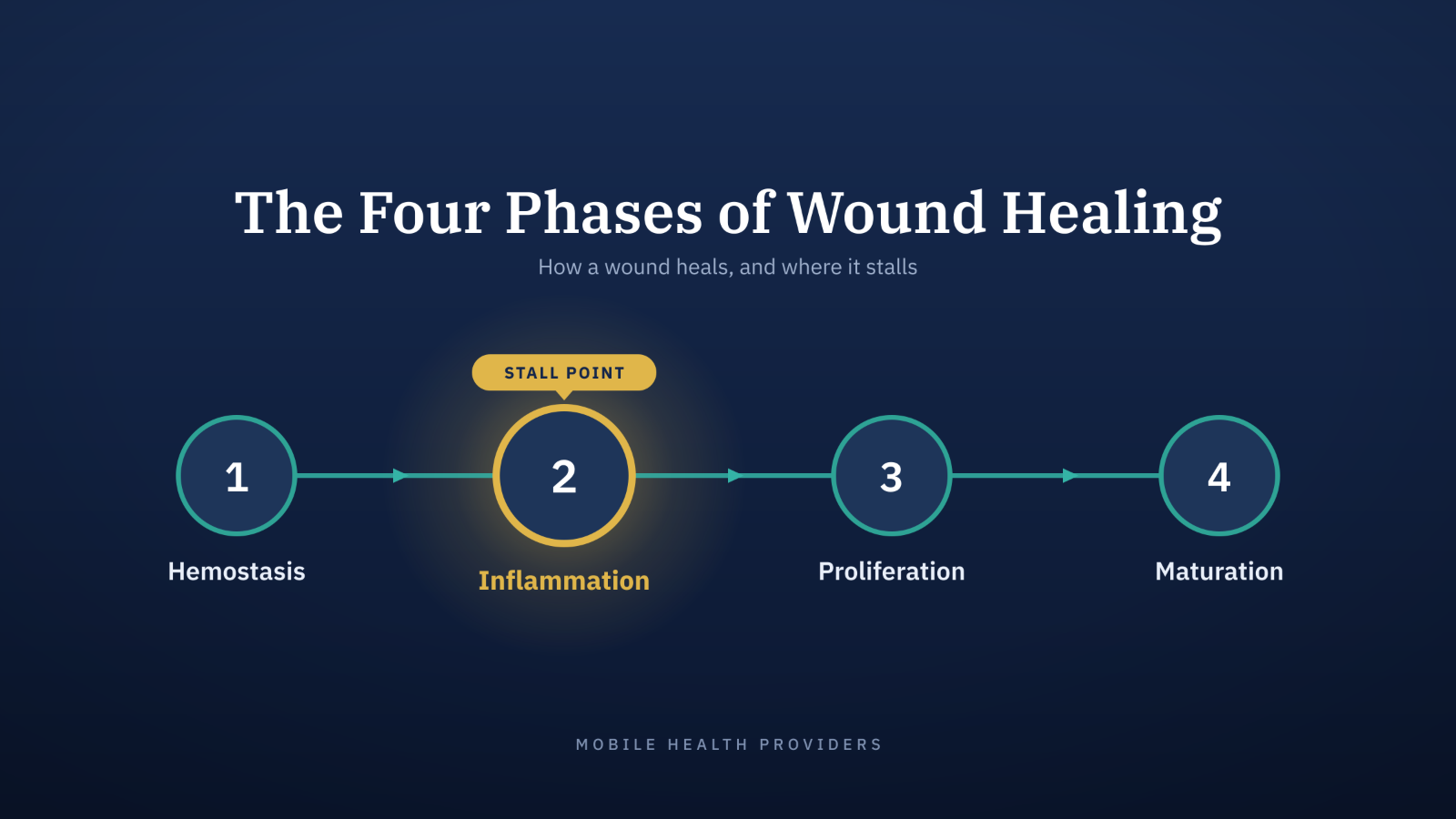
Here's a pattern I see often, with the details changed for privacy and offered only as an illustration. A patient has a leg ulcer that won't close. The daily wound care is fine. What's missing is compression, because no one explained that a venous leg ulcer won't heal without it. Add the right compression, and a wound that sat open for months finally starts to shrink. The routine matters as much as the product. When we take over a stalled wound, we work it through a clinical checklist called the TIME framework — tissue, inflammation, moisture, and the wound edge — to find what's blocking it.
What should I do if my wound isn't healing?
Start with the steps that find the cause, then get the right eyes on it.
- Track it. Note the size and how it looks once a week. If it isn't smaller in two weeks, treat that as a red flag.
- Watch for infection. Spreading redness, warmth, odor, more drainage, or fever means call a clinician now, not next week.
- Get your blood sugar and circulation checked. These are the two hidden causes that home care can't fix on its own.
- Be honest about smoking. Even cutting back helps. Quitting helps more.
- Eat enough protein. Your body can't rebuild tissue without the raw material.
- Match the dressing to the wound. The right dressing depends on the wound, and it changes as the wound changes.
- If it's been open more than four weeks, see a wound specialist. Don't wait for it to fix itself.
For homebound and mobility-limited patients, getting to a wound clinic is its own barrier, and a missed appointment can mean weeks of lost ground. That's the gap our practice fills. We bring advanced wound care to the home, the skilled nursing facility, or the assisted living community across San Bernardino, Riverside, Los Angeles, and Orange counties. These services are covered by Medicare when a patient meets eligibility and medical necessity requirements.
Frequently asked questions
How long is too long for a wound to heal?
Four weeks. A wound that hasn't healed or clearly improved in four weeks is considered chronic and should be evaluated by a clinician. I get concerned earlier, at two weeks with no visible progress.
Can a wound heal on its own if it's been open for months?
It's unlikely without finding and fixing the cause. A wound open for months almost always has a blocker like poor circulation, biofilm, or uncontrolled diabetes that daily home care alone won't solve.
What does an infected wound look like?
Look for spreading redness, warmth, swelling, increasing or foul-smelling drainage, and pain that's getting worse. Fever or feeling unwell can mean the infection is spreading, and that needs same-day attention.
Does biofilm mean my wound is infected?
Not exactly, but close enough to matter. Biofilm is a protective bacterial layer found in about 78% of chronic wounds, and it can keep a wound stuck even when it doesn't look classically infected.
Will wound care at home be covered by Medicare?
Medicare covers home-based wound care for patients who meet eligibility and medical necessity rules. Coverage depends on your specific situation. If you're in San Bernardino, Riverside, Los Angeles, or Orange county, call us and we'll verify your coverage before any care starts.
Can I treat a non-healing wound at home by myself?
You can handle the daily care. You can't diagnose why it stalled. A wound that isn't improving needs a clinician to find the underlying cause.
A wound that won't heal is telling you something. Some part of the body needs attention, and the sooner you find it, the sooner the wound has a real chance to close. Track it weekly, watch for infection, and don't let a stalled wound ride past the four-week mark.
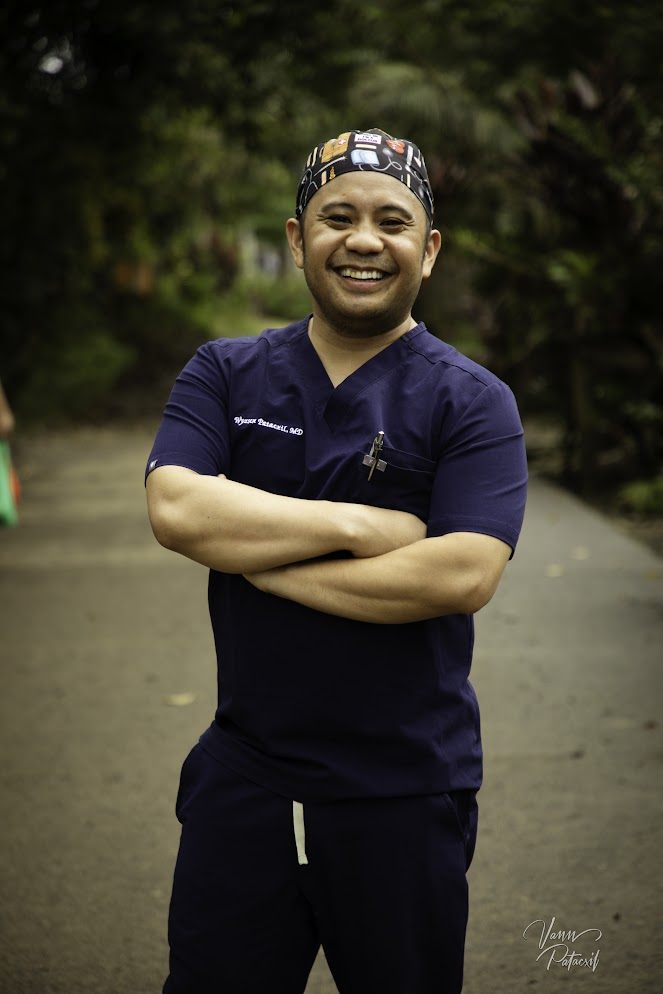
Dr. Wyzscx Patacxil, MD, CWSP
Dr. Patacxil is the physician-owner of Mobile Health Providers, a house-call primary care and advanced wound care practice serving patients across San Bernardino, Riverside, Los Angeles, and Orange counties. He treats homebound and mobility-limited Medicare beneficiaries in their homes, skilled nursing facilities, and assisted living communities. His clinical focus includes chronic wound management, chronic care management, and preventive medicine. He writes about wound care, aging, health technology, and what modern house-call medicine actually looks like.
Read more about Dr. Patacxil →About this article
This article is for general education and is not medical advice. Reading it does not create a doctor-patient relationship. Talk with a qualified clinician about your specific situation.
Every wound and every patient is different. Nothing here guarantees a particular result, and outcomes depend on the individual.
Mobile Health Providers is an independent medical practice. We are not affiliated with or endorsed by Medicare or CMS. Coverage for any service depends on a patient's eligibility and medical necessity.
Device and product names are mentioned to describe the care we provide and remain the trademarks of their respective owners.
California license A133325. See our Terms of Use and Privacy Policy.